Wandering Through Time: Nuremberg’s Hidden Architectural Soul
Ever walked down a street and felt like you’d slipped into another century? That’s Nuremberg for you. I went looking for history, but what I found was so much more—centuries-old half-timbered houses, Gothic spires cutting through the sky, and quiet courtyards whispering secrets. This city doesn’t just show off its architecture—it lives it. And trust me, you’ve never seen medieval charm like this. Every alleyway, every carved beam, every weathered stone tells a story not only of the past but of endurance, identity, and rebirth. Nuremberg is not a museum frozen in time; it’s a vibrant city where history breathes through its streets, inviting visitors to walk slowly, look closely, and feel the weight and warmth of centuries beneath their feet.
First Steps into a Storybook City
Arriving in Nuremberg feels like stepping into a carefully preserved chapter of European history. The moment you enter the Altstadt, or Old Town, the modern world recedes. Cobblestone streets ripple underfoot, worn smooth by centuries of footsteps, horse-drawn carts, and now, the quiet shuffle of curious travelers. Towering above it all is the Kaiserburg Nuremberg, a medieval castle fortress perched on a sandstone ridge that has overlooked the city since the 11th century. Its twin towers and fortified walls are not reconstructions—they are original, restored with meticulous care to honor their 15th-century form. This is not a city that rebuilt from memory; it is one that rebuilt from the bones of what survived.
The Altstadt itself is a masterclass in urban continuity. Unlike many European cities where war or modernization erased historic cores, Nuremberg retained much of its original street plan and architectural fabric. The city’s fortifications, among the most complete in Europe, encircle the old center like a stone embrace. Walking along the defensive walls, you can trace the city’s medieval boundaries and imagine how life unfolded within them—markets bustling in the Hauptmarkt, artisans hammering in their workshops, and guards keeping watch from the towers. The blend of Romanesque solidity, Gothic verticality, and half-timbered intimacy creates a visual rhythm that feels both harmonious and deeply layered.
One of the most striking aspects of Nuremberg’s historic core is its authenticity. While some buildings were reconstructed after World War II, the city committed to using original materials and techniques whenever possible. Wooden beams were replaced with oak of the same grain and cut; stone was quarried from the same sources. This dedication to integrity means that even reconstructed facades carry the weight of truth. In the Lorenzer Viertel, one of the oldest residential districts, you can see how architecture evolved over time—Gothic foundations supporting Renaissance additions, medieval courtyards now housing quiet cafes. Each block is a timeline, and every building, a chapter.
The Magic of Half-Timbered Houses
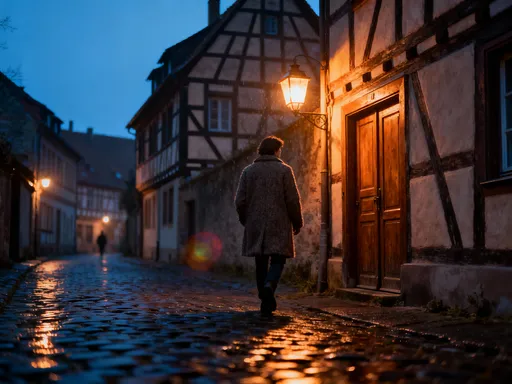
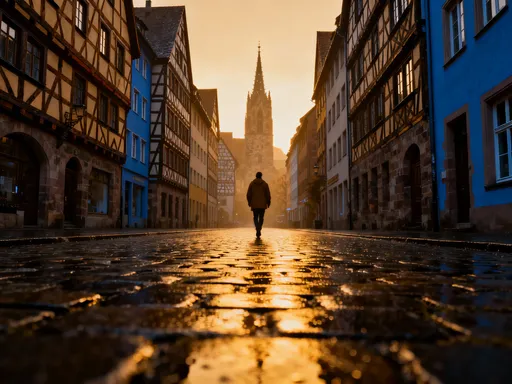
No image captures the soul of Nuremberg quite like its Fachwerkhäuser—half-timbered houses with exposed wooden frames and colorful infill between the beams. These are not stage-set facades for tourists; they are living homes, shops, and restaurants that have stood for hundreds of years. The most famous concentration of these buildings is along Weißgerbergasse, once the heart of the tanners’ quarter. The name itself—"White Tanners’ Lane"—hints at the area’s past, when artisans processed leather and hung their wares to dry in the open air. Today, the street is a postcard-perfect row of leaning, gabled houses, their upper floors jutting out over the narrow lane, as if leaning in to share a secret.
These houses were built for both beauty and function. The exposed timber framework wasn’t just decorative—it was structural, allowing builders to create strong, flexible walls without the need for heavy stone. The overhanging upper stories served a practical purpose: they maximized living space on narrow plots while providing shelter from rain and snow below. The steeply pitched roofs helped shed the heavy Bavarian snowfall, and the intricate carvings on beams and gables often carried symbolic meaning—protection, prosperity, or the family’s trade. A carving of a bear might mark a butcher’s home; a pair of crossed hammers, a blacksmith.
What makes Nuremberg’s half-timbered houses so remarkable is their survival. Unlike many German cities where entire historic districts were lost to bombing, Nuremberg’s craftsmen and citizens chose to rebuild these homes faithfully. In some cases, charred beams were preserved and incorporated into new structures as a testament to resilience. Walking through Weißgerbergasse today, you’re not just seeing a reconstruction—you’re witnessing continuity. The same wood, the same craftsmanship, the same spirit lives on. These houses are not frozen in time; they are part of a living tradition, where each generation adds its own care without erasing the past.
Gothic Grandeur: Churches That Reach the Sky
If the half-timbered houses are the soul of Nuremberg, its churches are its voice—soaring, resonant, and full of light. St. Lawrence Church (Lorenzkirche) and St. Sebaldus Church (Sebalduskirche) are two of the most magnificent examples of Gothic architecture in southern Germany. Their spires pierce the skyline, visible from nearly every corner of the Altstadt, drawing the eye upward as if in prayer. Inside, the effect is even more powerful. Soaring ribbed vaults create a sense of infinite height, while stained-glass windows—some dating back to the 14th century—filter sunlight into a kaleidoscope of color that dances across stone floors and gilded altars.
St. Lawrence Church, begun in the 13th century and completed over the next 200 years, is a masterpiece of High Gothic design. Its west façade features a stunning rose window, one of the largest in Germany, filled with intricate tracery and biblical scenes. Inside, the choir screen—a rare surviving example of medieval metalwork—glows with delicate ironwork. The church was not just a place of worship; it was a center of civic life. Merchants prayed here, guilds held meetings in its side chapels, and during times of war, it served as a refuge. Its survival through the centuries, including the devastation of World War II, is a testament to the city’s determination to preserve its spiritual and cultural heart.
St. Sebaldus Church, named after Nuremberg’s patron saint, is equally awe-inspiring. Built in the 13th century and expanded over time, it houses the ornate shrine of Saint Sebald, a gilded bronze tomb crafted in the 15th century by Peter Vischer and his sons. The craftsmanship is staggering—every inch of the shrine is covered in detailed figures, biblical scenes, and floral motifs. The church’s interior combines Gothic structure with later Renaissance additions, creating a rich tapestry of styles that reflects Nuremberg’s long artistic tradition. Both churches stand not only as religious monuments but as symbols of the city’s enduring identity—a place where faith, art, and community have always been intertwined.
Defensive Walls and Watchtowers: The City as Fortress
Encircling the Altstadt is one of the most impressive medieval fortification systems in Europe. Stretching over five kilometers and punctuated by more than 80 towers, Nuremberg’s city walls were built between the 12th and 15th centuries to protect the city from invasion, siege, and unrest. Unlike many cities that dismantled their walls during modernization, Nuremberg preserved nearly the entire circuit—a rare feat that allows visitors to walk the full defensive path and experience the city as it was meant to be seen: from the ramparts, looking inward and outward at once.
The walls are not just relics; they are functional spaces. A wide walkway runs along the top, offering panoramic views of red-tiled rooftops, church spires, and the distant hills of Franconia. From this vantage point, you can trace the logic of medieval urban planning—the dense cluster of buildings within the walls, the strategic placement of gates, the way the terrain was used to strengthen defenses. The Frauentor and Spittlertor are two of the most striking surviving gates. Both retain their original portcullises, guard chambers, and arched passageways, allowing visitors to step through history as they pass beneath centuries-old stone arches.
What makes these fortifications so remarkable is their integration into daily life. Unlike isolated castles or military ruins, Nuremberg’s walls were part of the city’s identity. They weren’t just for defense; they were symbols of civic pride and autonomy. The towers were manned by citizen guards, not professional soldiers, and the cost of construction and maintenance was shared among the city’s wealthy families. This collective effort speaks to a deep sense of community and responsibility. Today, walking the walls is not just a tourist activity—it’s a way to connect with the city’s past, to feel the strength of its stone, and to understand how security, identity, and urban life were once inseparable.
Renaissance Touches in Unexpected Corners
While Nuremberg is best known for its medieval architecture, the Renaissance left its mark in subtle but profound ways. The most famous example is the Albrecht-Dürer-Haus, the former home of the great German artist Albrecht Dürer. Acquired by the city in 1871 and restored to reflect its 16th-century appearance, the house blends late Gothic structure with Renaissance elegance. Symmetrical layouts, arched doorways, and a sunlit inner courtyard reflect the influence of Italian humanism, which Dürer encountered during his travels to Venice. The house is not a grand palace but a dignified residence, where art, scholarship, and domestic life coexisted.
Beyond the Dürer House, other patrician homes around Tiergärtnertor and Karolinenstraße reveal how wealthy Nuremberg families embraced Renaissance ideals. These homes feature classical pilasters, ornate stonework, and balanced proportions—signs of a shift from medieval fortification to human-centered design. The interiors were designed for light, comfort, and intellectual exchange, with large windows, frescoed walls, and private studies. This architectural evolution mirrored broader cultural changes: Nuremberg was no longer just a trading hub or military stronghold; it was becoming a center of art, science, and humanist thought.
What makes these Renaissance buildings so special is their quiet integration into the medieval fabric. They don’t dominate or disrupt; they enhance. A classical doorway might appear in a Gothic facade; a Renaissance courtyard might lie behind a half-timbered exterior. This layering of styles reflects a city that valued progress without rejecting its past. It was a place where innovation was welcomed, but only if it respected the existing harmony. Today, these buildings remind us that cultural evolution doesn’t require erasure—it can be a conversation across centuries.
Rebuilding with Integrity: Post-War Architecture
Nuremberg’s architectural story would be incomplete without acknowledging the devastation of World War II. In January 1945, Allied bombing raids destroyed over 90% of the Altstadt, reducing centuries of history to rubble. Yet, unlike cities that chose modernization over restoration, Nuremberg made a deliberate choice: to rebuild with fidelity to the past. This was not nostalgia—it was a moral and cultural decision. The city’s leaders believed that preserving the historic skyline, street plan, and architectural character was essential to healing and identity.
The reconstruction effort, which lasted decades, was guided by detailed archival plans, photographs, and surviving fragments. Where possible, original materials were reused. Charred timbers were restored; salvaged stone was re-cut and re-laid. The goal was not to create replicas but to restore continuity. The Germanisches Nationalmuseum, Germany’s largest museum of cultural history, was expanded in the mid-20th century with new wings that seamlessly blend with the historic structure. The design respects the scale, materials, and rhythm of the old buildings, proving that modern architecture can honor the past without imitating it.
Even the city’s most controversial modern addition—the Documentation Center Nazi Party Rally Grounds—demonstrates this principle. Built into the remains of a Nazi congress hall, the center uses stark, minimalist architecture to contrast with the monumental, oppressive style of the original regime. The design does not glorify; it reflects, questions, and educates. It stands as a powerful example of how architecture can engage with difficult history without erasing it. In Nuremberg, rebuilding was never about forgetting—it was about remembering with clarity, responsibility, and hope.
Why Nuremberg’s Architecture Matters Today
Nuremberg’s buildings are not just beautiful—they are meaningful. They tell a story of resilience, identity, and the enduring power of human craftsmanship. Each architectural style—medieval, Gothic, Renaissance, modern—reflects not just aesthetic choices but values: community, faith, intellect, memory. When you walk through the Altstadt, you’re not just seeing old buildings; you’re experiencing a living dialogue between past and present. The half-timbered houses speak of everyday life; the churches, of spiritual aspiration; the walls, of collective security; the reconstructions, of moral courage.
For travelers, especially those who value depth and authenticity, Nuremberg offers more than sightseeing—it offers understanding. It invites you to slow down, to notice the curve of a beam, the pattern of a tile, the way light falls through a stained-glass window. It reminds us that cities are not just collections of buildings but vessels of memory. In an age of rapid change and disposable design, Nuremberg stands as a quiet rebuke to transience. It shows that beauty, when rooted in truth and care, can endure.
More than that, Nuremberg’s architecture teaches us about reconciliation. The city could have erased its past, built something new and forgetful. Instead, it chose to remember—through every restored beam, every preserved wall, every honest monument. It reminds us that healing does not mean forgetting, and that identity is built not by rejecting history but by engaging with it honestly. When you walk these streets, you’re not just a visitor—you become part of that story. And that, perhaps, is the greatest gift architecture can offer: not just to shelter us, but to connect us—to time, to place, and to each other.