You Won’t Believe These Hidden Viewpoints in Jeddah
Jeddah isn’t just a gateway to the holy cities—it’s a coastal gem with layers waiting to be explored. From the Red Sea’s shimmering horizon to the quiet backstreets where history whispers through weathered coral walls, the city reveals itself in unexpected ways. I went beyond the souks and skyscrapers, chasing perspectives that most travelers miss. What I found wasn’t just beauty—it was depth, contrast, and a modern Saudi spirit rising with quiet confidence. This is a city of duality: ancient and ultramodern, grounded in tradition yet reaching toward the future. To truly see Jeddah, one must look beyond postcard panoramas and seek out the subtle vantage points that tell its fuller story.
First Glimpse: Arrival with a View
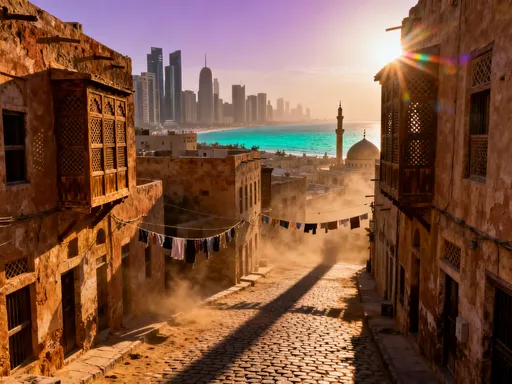
As the plane descends toward King Abdulaziz International Airport, the first impression of Jeddah unfolds in a slow reveal. The Red Sea glimmers under the sun, a ribbon of turquoise tracing the edge of an expanding urban landscape. From the airport road, the city presents itself as a layered tapestry—low-rise historic districts give way to clusters of glass towers, while the Corniche stretches like a silver thread along the coastline. This initial journey offers more than just scenery; it sets the tone for what Jeddah represents: a metropolis rooted in heritage but accelerating into modernity.
Elevation shapes perception, and arriving at ground level offers a different kind of insight. The contrast between old and new becomes immediate. On one side, traditional Hejazi homes with intricately carved wooden balconies stand quietly beside bustling markets. On the other, sleek commercial complexes reflect the sky in mirrored facades. This juxtaposition isn’t accidental—it’s intentional, a sign of a city that honors its past while embracing transformation. For the observant traveler, these early views are not just visual but symbolic, hinting at deeper narratives waiting to be uncovered.
What begins as a fleeting impression evolves into curiosity. Many visitors come expecting only a transit point to Mecca or Medina, but those who pause to observe discover a destination in its own right. The drive into the city becomes the first chapter in a visual story—one where architecture, geography, and culture converge. It’s here that the idea of perspective takes root: to understand Jeddah, one must learn to look up, look closely, and look beyond the obvious. The city doesn’t reveal itself all at once; it unfolds gradually, rewarding those who travel with awareness.
Al-Balad: Where History Stands Tall
At the heart of Jeddah’s identity lies Al-Balad, its historic district and a UNESCO World Heritage candidate. Walking through its narrow, winding alleys feels like stepping into a living archive. The buildings here, constructed from coral stone harvested from the Red Sea, rise three or four stories high, their facades marked by time and sea air. But it’s the upper levels that offer the most compelling viewpoints—not just of the neighborhood, but into the soul of Hejazi culture. The rawasheen, or ornate wooden balconies, project from the facades like outstretched arms, once designed to allow residents to observe street life while maintaining privacy.
These elevated spaces were more than architectural features—they were social observatories. In a climate where midday heat dictated rhythms, families gathered in the cooler upper rooms, watching merchants pass below, listening to the calls of vendors, and participating in community life from a remove. Climbing the steep, narrow staircases inside these homes reveals how verticality shaped daily experience. From the rooftops, one gains not only a physical vantage point but a cultural one: the rooftops served as extensions of the home, places for evening gatherings, prayer, or simply catching the sea breeze.
Today, restoration efforts have preserved many of these structures, turning some into cultural centers, guesthouses, and small museums. Visitors can now experience these viewpoints firsthand, standing where generations once lived and looked out over their world. The view from a rawasheen balcony is not just scenic—it’s intimate. It frames fragments of the city: a minaret piercing the sky, laundry fluttering between buildings, the glint of sunlight on aged wood. These are not curated panoramas but lived-in scenes, offering a rare glimpse into a way of life that continues to influence modern Jeddah.
The Corniche: A City’s Pulse Along the Water
Stretching over 30 kilometers along the Red Sea, Jeddah’s Corniche is more than a scenic drive—it’s the city’s social spine. Designed with families in mind, the promenade features landscaped walkways, shaded seating areas, and designated zones for walking, cycling, and relaxation. As the sun begins its descent, the atmosphere shifts. The heat softens, the sky blushes in hues of amber and rose, and the waterfront comes alive with movement. This is when the Corniche reveals its true character: a place where the city breathes, connects, and reflects.
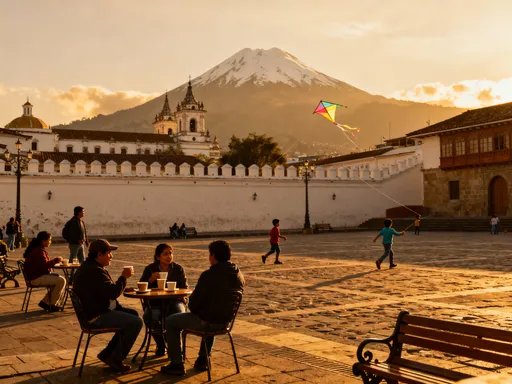
The design of the Corniche emphasizes openness and access. Wide pedestrian paths invite strollers, while elevated viewpoints along the breakwaters offer unobstructed sea vistas. Sculptures dot the landscape—among them the famous Friendship Hand and the Flying Fish—each adding a touch of artistic expression to the natural backdrop. Fishermen line the edges of the jetties, their rods steady against the rhythm of the waves, a quiet contrast to the families spreading out picnic mats or children chasing kites in the evening wind.
Sunset along the Corniche is a shared ritual. As the call to prayer echoes from nearby mosques, blending with the sound of lapping water, the scene becomes almost cinematic. The skyline of modern Jeddah glows in the distance, its towers catching the last light. Yet the focus remains on human connection—couples walking arm in arm, elders sipping tea, teenagers laughing under palm trees. This is not a passive view but an immersive experience, where the landscape and its people form a single, evolving tableau. For travelers, the Corniche offers a different kind of perspective: one measured not in height, but in moments of stillness and shared presence.
Elevated Eats: Dining with a Vista
In recent years, Jeddah has cultivated a dining culture that values not just flavor but atmosphere. Across the city, restaurants and cafes on upper floors have become destinations in their own right, blending culinary experience with visual reward. Whether nestled in a mid-rise building in Al-Rawdah or perched atop a modern complex near the North Corniche, these elevated eateries offer views that enhance the meal. The act of dining becomes layered—flavors on the palate, conversations in the air, and the city unfolding below.
One does not need to visit a luxury hotel to find such experiences. Local favorites often occupy unassuming buildings, their rooftop terraces revealed only upon ascent. Here, the menu might feature traditional Saudi dishes—kabsa, mandi, or haneeth—served with a side of panoramic sea or cityscape. The ambiance is relaxed, the service warm, and the view unscripted. At night, the city lights shimmer like scattered stars, and the Red Sea absorbs the glow of the moon. It’s a setting that encourages lingering, conversation, and quiet appreciation.
This growing emphasis on view-conscious dining reflects a broader shift in urban lifestyle. As Jeddah’s residents embrace new forms of leisure and socializing, spaces that combine comfort, culture, and scenery gain popularity. Rooftop cafes host poetry readings, family gatherings, and informal meetups, becoming micro-communities suspended above the street. For visitors, these spots offer more than a meal—they provide a vantage point to observe daily life from a gentle remove, where the pace slows and the details sharpen. It’s here that one begins to understand how Jeddah’s people see their city: not just as a place to live, but as a backdrop for connection.
Modern Vantage Points: Towers and Terraces
As Jeddah grows vertically, new opportunities for elevated perspectives emerge. While the city is still developing its skyline, several commercial and residential towers now feature observation areas, sky lounges, or public terraces that invite visitors to look down as well as out. These modern vantage points differ from traditional ones in scale and sensation. Where Al-Balad’s views are intimate and human-scaled, the city’s upper floors offer a sweeping, almost cinematic panorama—one that captures the vastness of Jeddah’s expansion.
From these heights, the urban layout becomes clearer. The grid of streets, the clusters of neighborhoods, the long arc of the Corniche—all are visible in a single glance. The Red Sea stretches to the horizon, while new developments like the Jeddah Tower project site hint at the city’s future skyline. These views are not just impressive; they are informative, revealing patterns of growth, connectivity, and planning. They show a city in motion, balancing density with open spaces, tradition with innovation.
Yet, there is a trade-off. The emotional resonance of a rooftop in Al-Balad—the sound of voices, the scent of wood and incense—is replaced by the quiet hum of air conditioning and polished floors. The intimacy of shared space gives way to a more individualized experience. Still, these modern viewpoints have value. They represent a new way of seeing, one shaped by technology, design, and ambition. For travelers, they offer a complementary perspective—one that, when combined with the older, grounded views, forms a more complete picture of Jeddah’s identity.
Offbeat Angles: Hidden Spots with Big Perspectives
Sometimes, the most memorable views come from places never intended as tourist attractions. In Jeddah, these unofficial vantage points are scattered throughout the city, waiting to be discovered by those who wander with curiosity. A parking garage with an open top floor might offer a stunning sunrise over the harbor. A quiet mosque with public access to its minaret—where permitted—can provide a rare 360-degree view of the surrounding neighborhood. Even a rooftop market during the cooler months transforms into an impromptu observation deck, where shoppers pause between stalls to take in the scene.
These accidental viewpoints often feel more authentic than designated lookouts. Free from crowds and entrance fees, they belong to the rhythm of daily life. A fisherman’s perch on a breakwater, a vendor’s elevated cart near a busy intersection, or the upper floor of a family-owned shop—each offers a fleeting but genuine perspective. They are not framed by glass or guarded by security; they are part of the city’s living fabric.
Discovering these spots requires no special equipment, only a willingness to explore on foot and look up. It means turning down side streets, climbing a few extra stairs, or striking up a conversation with a local who might point the way. The reward is not just the view, but the sense of having uncovered something personal and unscripted. In a world of curated travel experiences, these hidden angles remind us that the best perspectives are often the ones we stumble upon, not the ones we plan.
Beyond the Frame: Jeddah Through Local Eyes
After days of chasing views, I realized that the most powerful perspectives weren’t found in elevation, but in conversation. Sitting with residents—shopkeepers, artists, educators—I began to see Jeddah not as a collection of sights, but as a community shaped by memory, change, and pride. One elderly man recalled walking to school past coral houses that still stand today. A young architect spoke passionately about blending traditional design with sustainable innovation. A mother described bringing her children to the Corniche not for the view, but for the sense of safety and togetherness it provides.
These stories added depth to every landscape I had observed. The rawasheen were no longer just architectural details but symbols of family and privacy. The Corniche was more than a promenade—it was a space of generational continuity. The new towers were not just symbols of progress, but sources of hope for employment, education, and global connection. What I had seen with my eyes, I now understood with context. True perspective, I learned, is not just about where you stand, but what you carry with you—your history, your values, your sense of belonging.
This shift—from tourist to observer, from viewer to listener—transformed my experience. It reminded me that cities are not just places to be seen, but to be understood. Jeddah’s beauty lies not only in its seafront sunsets or historic facades, but in the quiet confidence of its people as they navigate change. To see the city fully, one must move beyond the frame of a photograph and engage with the life that fills it.
Conclusion
Jeddah reveals itself in layers, each offering a different kind of insight. From the historic heights of Al-Balad to the quiet corners of the Corniche, from rooftop cafes to accidental overlooks, the city invites exploration through multiple lenses. Its true richness lies not in any single view, but in the accumulation of moments—architectural details noticed, conversations remembered, sunsets shared. These are the perspectives that endure long after the journey ends.
For travelers, the lesson is clear: seek more than the obvious. Look beyond the postcard and into the life of the city. Climb the stairs, strike up a conversation, pause in stillness. Let your understanding grow not just from where you look, but from how deeply you see. Jeddah is a city in transformation, proud of its roots and confident in its direction. To witness it fully is to embrace both its vistas and its values. So come with curiosity. Come with respect. And above all, come with open eyes.